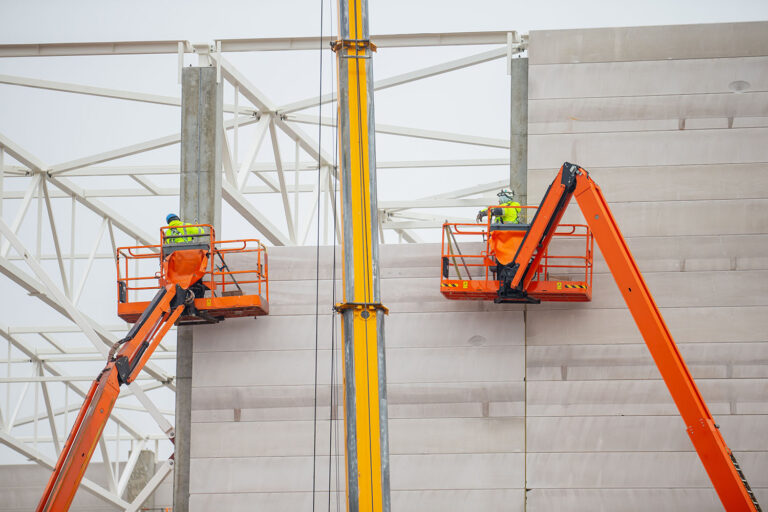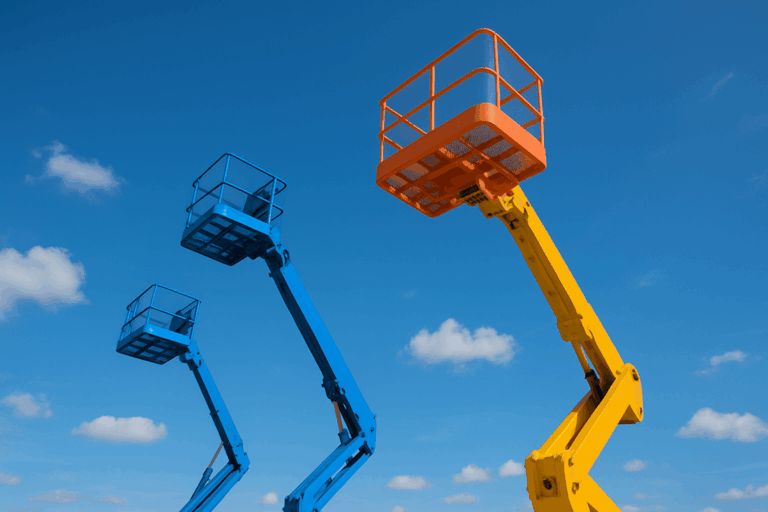
Access equipment refers to any type of machinery, platform, or system designed to allow people to safely reach elevated or difficult-to-access areas for work. This includes powered and non-powered equipment used in industries such as construction, facilities management, maintenance, warehousing, and logistics.
The purpose of access equipment is to provide safe, stable, and controlled elevation when working at height, reducing the risk of falls and ensuring compliance with UK safety legislation.
Access equipment can range from small push-around platforms to large self-propelled booms, offering different reach heights, load capacities, and mobility features depending on the application.
What Are 5 Examples Of Access Equipment?
There are many types of access platforms used across the UK, each suited to specific tasks and working environments.
Here are five of the most common examples:
Scissor Lifts
Scissor lifts use a crisscross (scissor-like) mechanism to raise the platform vertically. They’re ideal for indoor maintenance, installation, and warehouse tasks where vertical reach is needed.
Boom Lifts (Articulating and Telescopic)
Boom lifts feature an extendable arm that provides both vertical and horizontal reach, making them perfect for accessing hard-to-reach areas such as building exteriors or construction sites.
Vertical Mast Lifts
Compact and easy to manoeuvre, vertical mast lifts are used in confined spaces, typically indoors, for electrical, maintenance, or stock-picking tasks.
Spider Lifts
These lightweight, compact lifts have stabilising “legs” for use on uneven ground. They’re commonly used for tree surgery, building maintenance, and facilities management.
Truck and Van Mounts
Mounted platforms offer mobility and height in one, ideal for roadside, signage, or utility work where equipment needs to be driven between multiple sites.
Who Uses Access Equipment?
Access equipment is used by a wide range of industries and professionals who need safe, reliable access to work at height. Common users include:
- Construction and Building Contractors – for installing materials, roofing, or façade work.
- Facilities and Property Maintenance Teams – for cleaning, repairs, and maintenance of tall buildings.
- Warehousing and Logistics Operators – for stock management and equipment servicing.
- Utilities and Telecoms Engineers – for overhead cable, lighting, and infrastructure work.
- Hire Companies and Equipment Providers – for rental, testing, and compliance checks.
Regardless of the sector, anyone using access equipment has a legal duty to ensure that machinery is properly maintained, inspected, and safe to use.
How To Inspect Access Equipment
Inspecting access equipment is a critical part of ensuring safety and compliance. Under LOLER and PUWER regulations, access platforms must undergo regular thorough examinations carried out by a competent person.
Here’s how inspections are typically carried out:
- Pre-Use Checks
Operators should perform visual checks before every use, including assessing tyre condition, fluid levels, guardrails, control functions, and safety systems.
- Routine Maintenance Inspections
Scheduled servicing ensures that components such as hydraulics, controls, and brakes remain in safe working order.
- Thorough Examinations (LOLER Inspections)
Carried out at legally required intervals (usually every 6 months for MEWPs and lifting equipment used for people), these detailed inspections assess the structural integrity, function, and safety of the machine.
- Documentation and Record Keeping
A LOLER report or inspection certificate must be completed after each examination, detailing findings, defects, and the next due date. These records must be stored and made available for review when required.
At UK LOLER & MEWP Services, we provide nationwide LOLER and PUWER inspections, servicing, and maintenance for all types of access equipment. Our qualified engineers ensure your equipment remains safe, compliant, and operational, helping you meet all legal obligations with confidence.
Contact us today to arrange a quote or inspection and keep your access equipment performing safely and reliably.