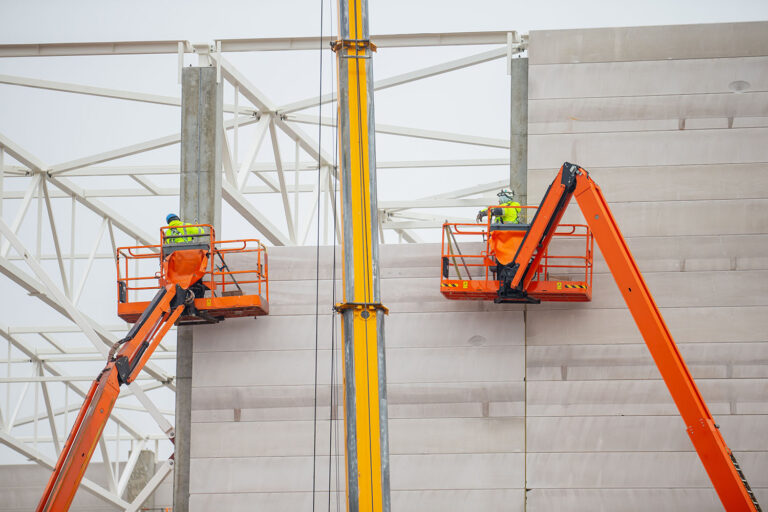
When it comes to working at height, not all machines are created equal. From compact units designed for indoor use to colossal giants capable of lifting operators to extraordinary elevations, mobile elevated work platforms (MEWPs) span an enormous range of sizes and capabilities.
But which machines sit at the very top? Here we explore the world’s largest boom lifts, what sets them apart, and why understanding the different types of boom lifts matters when choosing the right machine for your job.
Understanding Boom Lifts
Before diving into record breaking machines, it helps to understand what a boom lift actually is. Aerial work platformsthat use an extendable arm to raise a working platform are broadly split into two categories:
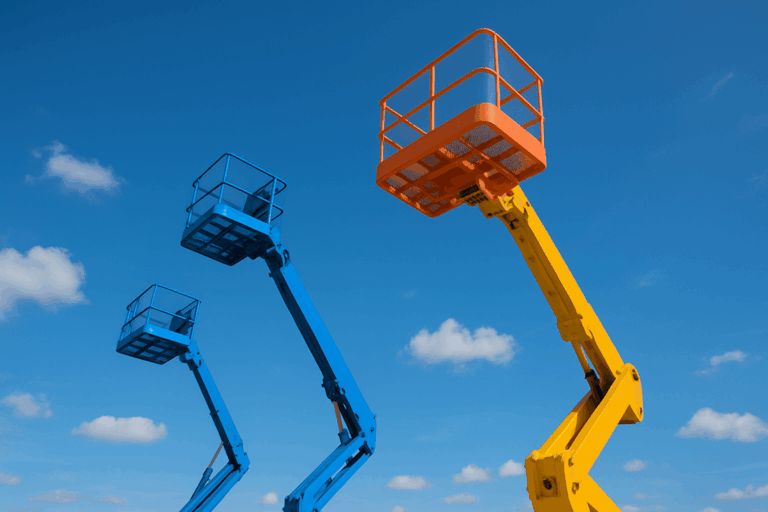
Telescopic boom lifts extend in a straight line, offering exceptional horizontal reach and working height. They are ideal for open outdoor environments where direct, long distance access is required.
Articulating boom lifts feature multiple jointed sections, allowing operators to manoeuvre the platform up and over obstacles. Their flexibility makes them perfectly suited to access hard to reach areas where a straight boom simply cannot navigate.
Both types are self propelled, meaning a propelled boom lift can be driven around a job site under its own power, often with multiple steering modes to aid precise positioning. This distinguishes them from static platforms and scissor lifts, which move vertically but lack the outward reach of a boom.
The JLG 1850SJ Ultra Boom
When talking about the tallest boom lifts in the world, one machine consistently leads the conversation: the JLG 1850SJ Ultra Boom. This extraordinary telescopic boom lift holds the record as the world’s largest self propelled boom lift in production, and its specifications are genuinely staggering.
The JLG 1850SJ offers a working height of approximately 56.69 metres (185 feet), roughly the equivalent of an 18 storey building.
Its platform height reaches around 54.18 metres, while its horizontal reach extends to an impressive 24.38 metres (80 feet). The machine features a telescopic jib at the end of the boom, providing additional articulation and helping operators fine tune the work envelope to position the platform exactly where it is needed.
The JLG 1850SJ is available in four wheel drive and offers multiple steering modes, including two wheel, four wheel, and crab steering, which is essential for a machine of this scale. Its platform capacity is rated at 340 kg, accommodating two workers along with tools and equipment at full height. This machine is the benchmark against which all other large boom lifts are measured.
The Snorkel 2100SJ
Hot on the heels of the JLG is the Snorkel 2100SJ, another towering telescopic boom lift that pushes the boundaries of what self propelled aerial work platforms can achieve. With a working height of approximately 64 metres (210 feet), the Snorkel 2100SJ has at various points been recognised as a serious competitor for the title of the tallest self propelled boom lift available anywhere in the world.
Like the JLG 1850SJ Ultra Boom, the Snorkel 2100SJ is designed for heavy duty outdoor applications such as construction, infrastructure maintenance, wind energy, and large scale industrial projects. Its generous platform capacityand extended work envelope make it a formidable option when projects demand the absolute maximum in elevated access.
Why Does Size Matter?
Understanding the scale of these machines helps businesses and contractors make better decisions. The tallest boom lifts in the world are not simply a novelty. They exist because certain industries genuinely need to access hard to reach areasat extreme heights. Bridge inspection, dam maintenance, telecommunications tower work, and large scale construction all present challenges that only the largest aerial work platforms can safely and efficiently address.
For the majority of applications, a more modestly sized articulating boom lift or telescopic boom lift will be far more practical and cost effective. Matching the machine to the task by considering working height, horizontal reach, platform capacity, and site conditions is always the priority.
Expert LOLER Inspections and MEWP Servicing
Whether you operate one of the world’s largest boom lifts or a compact unit for everyday maintenance tasks, all mobile elevated work platforms (MEWPs) must be subject to regular thorough LOLER inspections to comply with UK law. The Lifting Operations and Lifting Equipment Regulations 1998 require that all lifting equipment including boom lifts of every size is examined by a competent person at least every six months.
At UK LOLER and MEWP Services, we provide expert inspections, servicing, repairs, and machine sales right across the UK. Our experienced team understands the full spectrum of aerial work platforms, from the most compact scissor lifts to the most powerful propelled boom lifts on the market.
Get in touch today to discuss your LOLER inspection and MEWP servicing requirements.