Working at height has always been one of the most hazardous activities across construction, maintenance, engineering, and industrial sectors. From early scaffolding and ladders to today’s advanced Mobile Elevating Work Platforms (MEWPs) and strict safety regulations, the way we work at height has evolved dramatically over the years.
In the UK especially, improvements in legislation, equipment design, and inspection standards have played a vital role in reducing accidents and improving safety. Understanding how working at height has changed helps highlight why modern compliance, training, and inspections are so important today.
How Working From Height Has Changed Over The Years
Historically, working at height relied heavily on basic equipment, limited protection, and personal judgement rather than structured safety systems. Over time, the industry has shifted from reactive safety to proactive risk management.
Key changes include:
- The introduction of formal health and safety legislation
- Advances in access equipment such as MEWPs and powered platforms
- Mandatory inspection regimes like LOLER
- A greater focus on training, planning, and risk assessment
These changes have transformed working at height from a high-risk necessity into a tightly controlled activity designed to minimise danger wherever possible.
Working At Height In The 1900s
In the early 1900s, working at height was common but extremely dangerous. Workers frequently used ladders, rudimentary scaffolding, and improvised platforms with little consideration for fall protection. Safety equipment was minimal, and accidents were often seen as an unfortunate but accepted part of the job.
There were few regulations governing safe working practices, and inspections of lifting or access equipment were rare. Harnesses, guardrails, and fall arrest systems were either basic or non-existent. As a result, serious injuries and fatalities from falls were widespread across construction, shipbuilding, and industrial maintenance.
By the mid to late 1900s, awareness of workplace safety began to grow. The introduction of early health and safety laws, alongside improvements in scaffolding standards and the development of mechanical access equipment, marked the first steps toward safer working at height.
Working At Height In The 2000s
The 2000s marked a major turning point for working at height in the UK. The introduction of the Work at Height Regulations 2005 fundamentally changed how employers and contractors approached height-related tasks. These regulations placed clear legal responsibilities on duty holders to plan work properly, use suitable equipment, and ensure workers were competent.
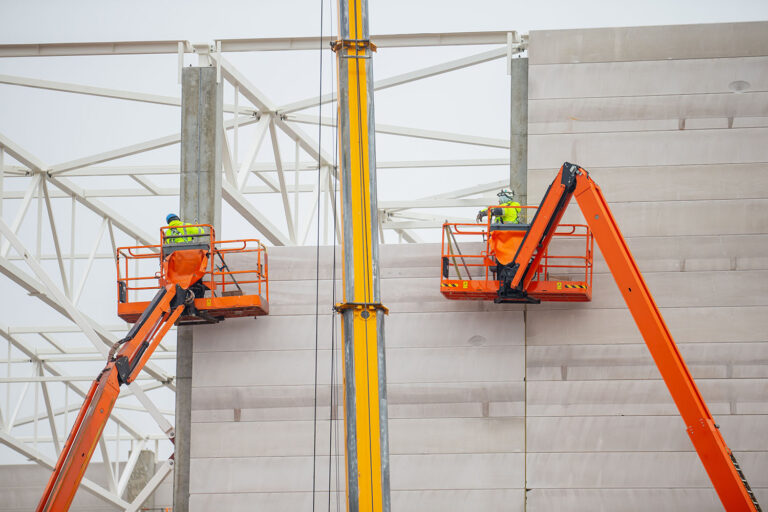
During this period, MEWPs became far more widely used, replacing ladders and scaffolding in many applications due to their efficiency and improved safety features. At the same time, LOLER (Lifting Operations and Lifting Equipment Regulations 1998) inspections became an essential requirement for lifting equipment, ensuring machines were regularly examined and maintained.
PUWER inspections also became increasingly important, covering a wide range of work equipment used at height, including MEWPs, access platforms, and associated machinery.
Technology also played a role, with improved machine design, better stability systems, emergency lowering functions, and enhanced operator controls. Safety training became more structured, and regular inspections and servicing became standard practice rather than optional extras.

Working At Height Evolution
Today, working at height is safer than ever, but only when the correct procedures, equipment, and inspections are in place. The industry now focuses on:
- Using the safest access method available
- Maintaining equipment through regular servicing and LOLER inspections
- Ensuring operators are properly trained and competent
Modern MEWPs are designed with multiple safety redundancies, and inspection regimes ensure faults are identified before they become dangerous. Businesses across the UK now recognise that compliance is not just a legal requirement, but a critical part of protecting workers and maintaining operational efficiency.
We support this evolution by providing expert LOLER inspections, MEWP servicing, repairs, and machine sales nationwide. As working at height continues to evolve, professional inspection and maintenance remain essential to keeping people safe and equipment reliable.