A mobile elevating work platform (MEWP) needs a LOLER thorough examination at least every 6 months, unless it is examined under an examination scheme drawn up by a competent person. This is because MEWPs lift people, and the Lifting Operations and Lifting Equipment Regulations 1998 (LOLER) set a shorter interval for equipment that lifts people than for most other lifting equipment. Extra examinations are also needed before first use in some cases and after exceptional circumstances.
This guide explains where these intervals come from and how routine checks fit around them. For whether LOLER applies at all, see our article on whether LOLER is a legal requirement.
LOLER inspection frequency: what regulation 9 says
Regulation 9 of LOLER covers thorough examination and inspection. Where lifting equipment is exposed to conditions that could cause deterioration liable to result in dangerous situations, the employer must make sure it is thoroughly examined:
- at least every 6 months, for equipment used to lift people and for lifting accessories
- at least every 12 months, for other lifting equipment
- in accordance with an examination scheme, as an alternative to the fixed intervals
- each time exceptional circumstances occur that are liable to jeopardise the safety of the equipment
The Health and Safety Executive (HSE) page on lifting people at work confirms that where people are lifted, equipment must be thoroughly examined at six-monthly intervals or in accordance with an examination scheme. HSE’s guidance on MEWPs in construction says the same for MEWPs specifically.
Why a MEWP LOLER thorough examination is due every 6 months
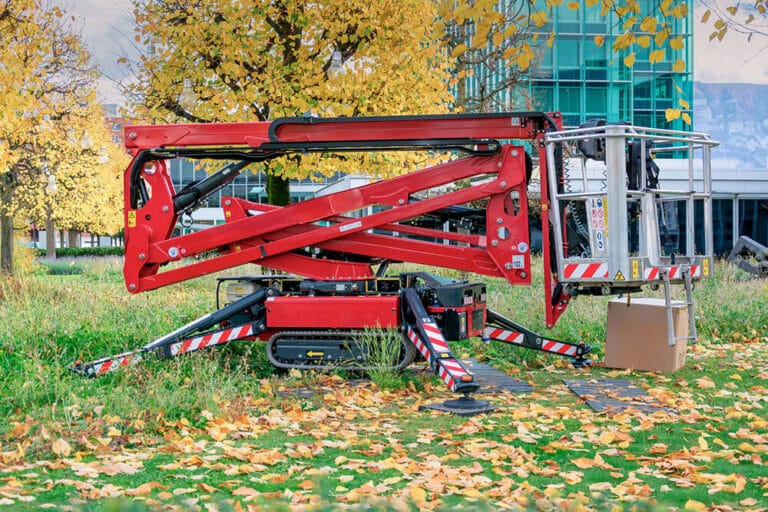
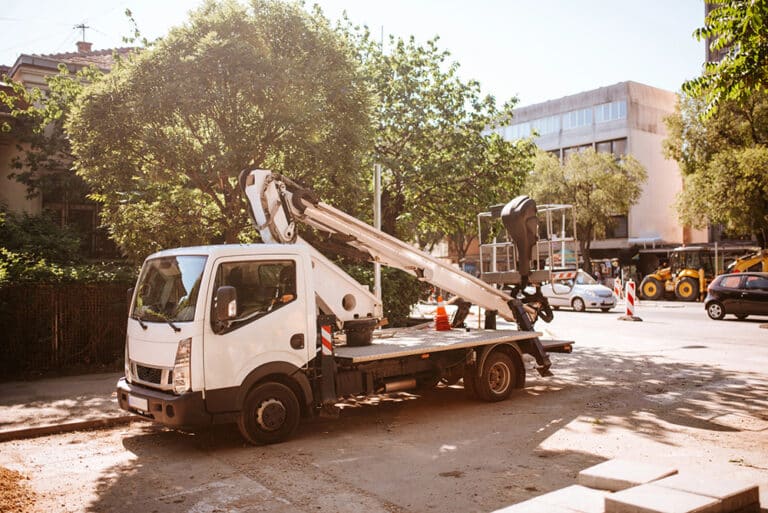
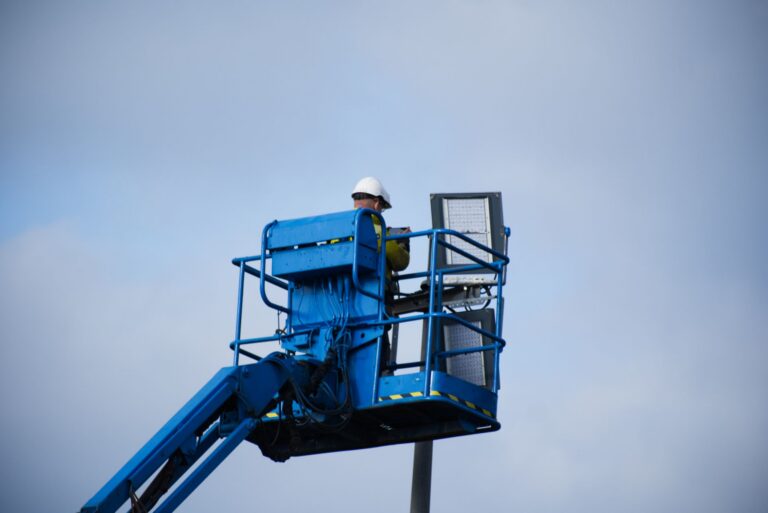
The 12 month interval applies to lifting equipment that only lifts loads. MEWPs, whether boom lifts, scissor lifts, spider lifts or truck mounts, exist to raise people to height, so they fall under the 6 month interval. HSE notes that lifting people carries greater risk, which is why the design, maintenance and examination standards are higher.
A thorough examination is sometimes called a LOLER test or LOLER check. HSE describes it as a systematic and detailed examination of the equipment and its safety-critical parts, carried out by a competent person. Load testing may form part of it in some cases, but HSE explains that routine testing is not usually necessary and that testing is based on risk.
What is an examination scheme?
An examination scheme is the alternative to fixed intervals. HSE’s leaflet INDG422 describes it as a detailed schedule of checks, examination techniques and testing requirements drawn up to suit the operating conditions of a specific item of equipment.
INDG422 makes several points about schemes:
- they identify the parts of the equipment to be thoroughly examined
- they can cover a number of similar items used in similar conditions
- they may set periods longer or shorter than the 6 or 12 month intervals, but a longer period must be based on a rigorous assessment of the risks
- they can be drawn up by the user, owner, manufacturer or another independent person with the necessary competence
- they are reviewed regularly, including at each thorough examination and after any event that may change the risks
HSE also notes that a scheme does not have to be a paper document, but a written copy has to be available on request.
Examinations before first use and after installation
Regulation 9 also requires a thorough examination before lifting equipment is first put into service. This does not apply where the equipment has an EC declaration of conformity made less than 12 months before it is first used, and was not assembled on site.
Where the safety of equipment depends on installation conditions, it is examined after installation and before first use, and again after assembly at each new site or location. INDG422 gives tower cranes and platform lifts as examples.
Exceptional circumstances
Some events call for a thorough examination regardless of when the last one took place. HSE gives examples such as damage or failure, long periods out of use, and major changes in how the equipment is used, or major modifications or repairs, that are likely to affect its integrity.
For a MEWP, that could follow an incident on site or a machine coming back into use after a long period in storage. If you are unsure whether something counts, speak to our team.
How often should a MEWP be inspected between examinations?
Thorough examinations are not the only checks LOLER expects. Regulation 9 also requires inspections by a competent person at suitable intervals between thorough examinations, where appropriate. INDG422 says the scope and frequency of these depend on the competent person’s opinion, and that they normally include visual and functional checks.
HSE’s MEWP guidance refers to a programme of daily visual checks, regular inspections and servicing schedules, set up according to the manufacturer’s instructions and the risks of each machine. It adds that a MEWP with a safety-critical fault is taken out of service. Under regulation 10, inspection findings are recorded in writing and any dangerous defect is reported to the employer straight away.
Thorough examination versus pre-use checks and maintenance
These terms are often mixed up, but they are different things:
- Pre-use checks are carried out by the operator before the machine is used, following the manufacturer’s instructions and the operator’s training. INDG422 makes clear that a thorough examination does not replace these checks.
- Inspections sit between thorough examinations, at intervals set by risk and the manufacturer’s guidance.
- Thorough examinations are the detailed, periodic examinations by a competent person, with a written report.
- Maintenance keeps the machine working as intended. INDG422 states that thorough examination is not intended to replace maintenance, which is a requirement under the Provision and Use of Work Equipment Regulations 1998 (PUWER).
HSE’s guidance is that the competent person carrying out a thorough examination is not the same person who does the routine maintenance, as they would then be assessing their own work.
Our team carries out LOLER inspections and PUWER inspections for MEWPs across the UK, alongside MEWP servicing.
To arrange a LOLER inspection, servicing or repairs for your MEWPs, contact our team on 0330 223 7390 or email info@lolermewp.co.uk.