A spider lift is a compact boom type mobile elevating work platform (MEWP) that travels on tracks and stands on fold-out outriggers while the platform is raised. The outriggers spread out from the base like legs, which is where the name comes from. Spider lifts are built to reach working height in places where a larger machine cannot go, such as through doorways, across soft lawns or into tight gaps between buildings.
This guide explains what a spider lift is, where tracked spider lifts tend to be used, their main features and how they compare with other types of MEWP. It also covers how the Lifting Operations and Lifting Equipment Regulations 1998 (LOLER) apply to them.
What is a spider lift?
Like other MEWPs, a spider lift raises people in a platform so they can work at height. What sets it apart is how it is built and how it reaches the work position.
Most spider lifts share a few basic parts:
- a narrow tracked base that the machine drives on
- a set of outriggers, usually four, that fold in for travel and spread out to support the machine before the boom is raised
- an articulated or telescopic boom, or a mix of both, carrying the platform
- controls on the platform and at the base
The tracks do the travelling and the outriggers provide the stable base for working at height. For boom type platforms more broadly, see our guide to what a cherry picker is.
What is a tracked spider lift used for?
Spider lifts are chosen for jobs where access, ground conditions or floor loading make a heavier wheeled or vehicle-mounted machine impractical. Typical uses include:
- Tree work. Arborists use spider lifts to reach the canopy in gardens, parks and other spaces that a truck cannot drive into.
- Indoor atria and halls. Shopping centres, hotels, churches, theatres and office receptions often have high ceilings but narrow entrances and finished floors.
- Restricted access sites. Courtyards, back gardens, alleys and spaces behind buildings where the only way in is through a gate or doorway.
- Uneven or sloping ground. Embankments, grass verges and landscaped areas where wheels would struggle.
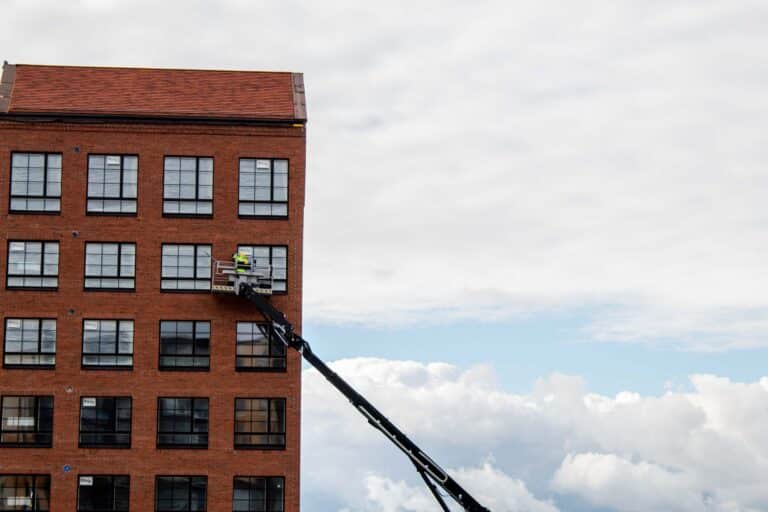
- Building maintenance. Gutter cleaning, window repairs, signage, lighting and facade work.
The Health and Safety Executive (HSE) notes on its MEWPs for tree work page that MEWPs can give safe and quick access to trees and a secure working platform. It adds that the Work at Height Regulations 2005 do not require MEWPs for all tree work, but that they should always be considered when planning it. HSE lists urban tree work and diseased or dying trees that are difficult to climb among the situations where MEWPs are well suited.
Key features of a spider lift
Tracks
Spider lifts travel on rubber or steel tracks rather than wheels. Tracks spread the machine’s weight over a larger area than tyres, which helps on grass, soil and other soft surfaces.
Outriggers
The outriggers give a spider lift its stability at height and allow it to be levelled on ground that is not flat. HSE’s construction MEWP guidance states that outriggers must be extended and chocked before the platform is raised, and that spreader plates may be needed, with the equipment manual as the reference.
Narrow width
Many spider lifts are designed so that, with the outriggers folded, they can pass through a doorway or garden gate. This is often the main reason they are chosen. The stowed width varies by model and is given in the manufacturer’s specification.
Low weight relative to reach
Spider lifts are built to be light and compact for the working height they offer, which suits surfaces where a heavier machine could cause damage or exceed the floor loading. Weights, working heights and outreach vary widely between models, so the manufacturer’s data is the source for any specific machine.
Ground conditions and floor loading
Even a light machine places concentrated loads on the ground through each outrigger foot. HSE’s information sheet GEIS6 on selecting and using MEWPs lists points to consider, including the ground bearing capacity at the work position and along the route, whether there is space to deploy the outriggers, the maximum point load under an outrigger or jack pad and whether spreader plates are required. For concrete slabs, it mentions comparing the slab loading limits with the machine’s maximum weight and point load.
How do spider lifts compare to other MEWP types?
GEIS6 names the main families of MEWP as vertical scissor lifts, self-propelled booms, vehicle-mounted booms and trailer-mounted booms. A spider lift is a boom type machine. In broad terms:
- Scissor lifts raise the platform straight up. They suit work directly overhead on firm, level floors but cannot reach up and over obstacles.
- Self-propelled boom lifts drive on wheels and tend to be larger and heavier, with many built for construction sites.
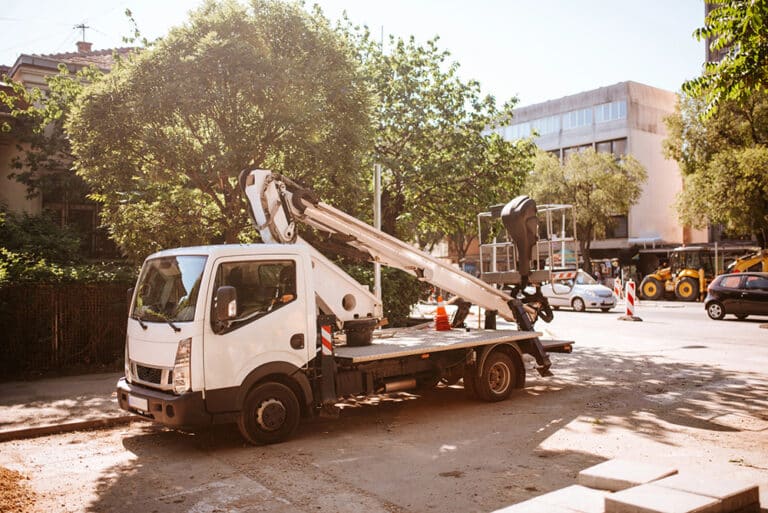
- Vehicle-mounted platforms (truck and van mounts) are driven on the road and set up from the vehicle, which needs room of its own.
- Trailer-mounted booms are towed to site and set up on outriggers, much like a spider lift, but moved on wheels rather than tracks.
A spider lift trades some of the speed and capacity of larger machines for access, and it is set up on its outriggers at each work position. GEIS6 also notes that boom type MEWPs generally have smaller baskets and lower lift capacities than scissor lifts. The right machine depends on the task, the site and the ground. For a specific job, speak to our team.
Spider lifts and LOLER thorough examination
Like every MEWP, a spider lift is lifting equipment that lifts people, so LOLER applies. Regulation 9 of LOLER requires lifting equipment exposed to conditions that could cause dangerous deterioration to be thoroughly examined at least every 6 months if it lifts people, or in line with an examination scheme drawn up by a competent person. An examination is also needed after exceptional circumstances that could affect safety.
HSE’s construction guidance also refers to daily visual checks and to following the manufacturer’s inspection and servicing schedule. Servicing and thorough examination are separate: one keeps the machine in working order, the other is a formal examination for defects by a competent person. Tracks, outriggers, levelling systems and the boom all need regular attention. Our team carries out spider lift servicing and LOLER inspections across the UK.
Setting up, levelling and operating a spider lift, along with emergency lowering, are covered in the manufacturer’s instructions, operator training and the employer’s risk assessment and rescue plan.
To arrange a LOLER inspection, servicing or repairs for your MEWPs, contact our team on 0330 223 7390 or email info@lolermewp.co.uk.