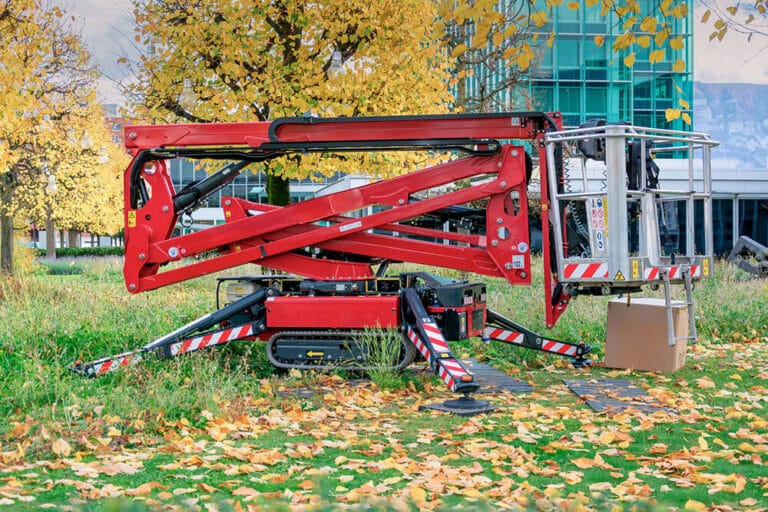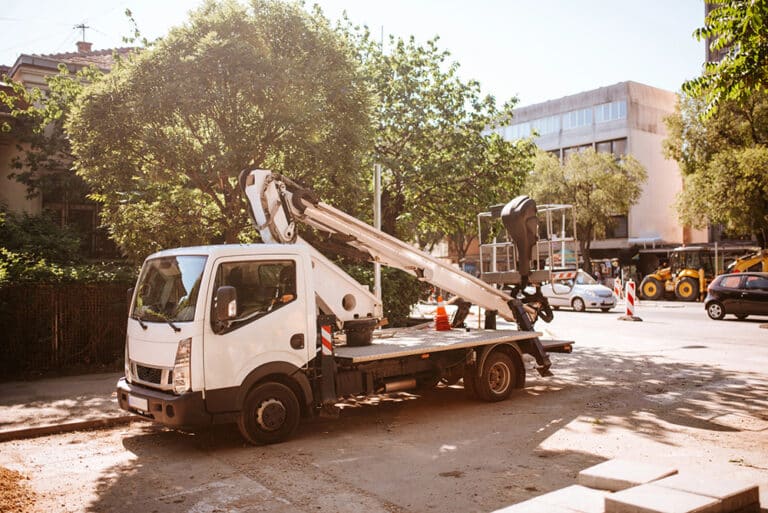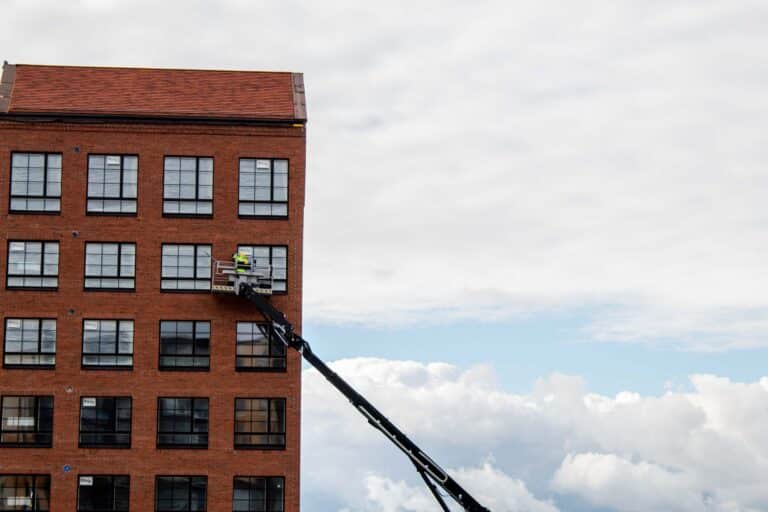
There is no single government-issued cherry picker licence in the UK, in the way there is a driving licence for a car. What the law does require is that anyone operating a cherry picker or scissor lift has adequate training and is competent for the work. One widely recognised way of showing this is a PAL (Powered Access Licence) card from the International Powered Access Federation (IPAF), often called an “IPAF licence”. This guide explains the legal duties, what the card is, how long it lasts and how renewal works.
Is a cherry picker licence a legal requirement?
The duties that apply to cherry pickers and other mobile elevating work platforms (MEWPs) are framed around training and competence rather than a licence. They come mainly from two sets of regulations.
PUWER training duties
The Provision and Use of Work Equipment Regulations 1998 (PUWER) apply to work equipment, including MEWPs. Regulation 9 of PUWER requires employers to ensure that everyone who uses work equipment has had adequate training for health and safety purposes. That training covers the methods to use, the risks the use may involve and the precautions to take.
The same regulation applies to employees who supervise or manage the use of work equipment. So the duty reaches beyond the person at the controls to the people organising the work. Our PUWER guide covers the wider regulations.
Work at Height competence duties
Using a MEWP is work at height, so the Work at Height Regulations 2005 also apply. Regulation 5 requires employers to ensure that no one takes part in work at height, including organising, planning and supervising it, unless they are competent. A person who is being trained can take part only while supervised by a competent person.
Neither regulation names a particular card or course. They set out what the employer has to achieve, and leave the employer to show how it has been done.
What HSE expects from MEWP operators
The Health and Safety Executive (HSE) page on mobile elevating work platforms gives more detail on what this looks like for MEWPs. It says operators should have attended a recognised operator training course and received a certificate, card or “licence” listing the categories of MEWP they are trained to operate. It also says the expiry date of the card should be checked.
HSE adds that formal training is not the whole picture. Operators should also have familiarisation training on the controls and operation of the specific make and model of MEWP they are using.
HSE also expects a plan for rescuing someone from a MEWP, with someone on the ground who knows what to do in an emergency. The detail of that belongs in the employer’s risk assessment and rescue plan, the manufacturer’s instructions and operator training, not in a general guide like this one.
What is an IPAF licence?
The “IPAF licence” is the PAL card. IPAF’s routes to renewal leaflet describes card holders as operators who have completed IPAF-approved training. IPAF courses are delivered by IPAF-approved instructors and training centres, and are made up of a theory module and a practical module, each with a test.
PAL cards are now issued digitally through IPAF’s ePAL app, which also holds a digital logbook. IPAF describes the regular entry-level MEWP operator course as taking between one and three days, depending on the candidate’s experience and the machine involved.
The card lists the machine categories the holder has trained on, such as 3a for mobile verticals and 3b for mobile booms. Training in one category does not cover the others, which is why HSE’s guidance refers to checking the categories on the card.
Do you need a scissor lift licence?
The same rules apply to scissor lifts as to booms. A scissor lift is a MEWP, so the PUWER and Work at Height duties above apply in the same way, and HSE’s guidance on recognised training and familiarisation covers it too.
There is no separate scissor lift licence in law. A PAL card that lists the right category for the scissor lift being used is the usual way of showing that the operator has been trained.
How long does IPAF last?
IPAF states that a PAL card is valid for five years, subject to regional variation. The expiry date is shown on the card, which is the date HSE’s guidance refers to when it mentions checking expiry.
An expiry date only shows when the card itself runs out. It does not replace the employer’s own judgement about whether an operator is still competent for a particular machine and task, or the need for familiarisation on a new make or model.
How IPAF renewal works
IPAF’s renewal leaflet sets out two routes for existing card holders:
- The MEWP operator renewal course. IPAF describes this as the quickest and simplest way to renew, taking between half a day and a day depending on the format. It covers categories 1a, 1b, 3a and 3b.
- The PAL+ advanced MEWP operator course. This renews the card while adding further training, and adds a plus sign to each relevant category on the card, for example 3b+.
For both courses, the theory module and test can be taken as eLearning or in a classroom led by an instructor. The practical module and test can be taken on a real machine, or for categories 3a and 3b only, on a virtual reality MEWP simulator. Courses for 1a and 1b have to be taken on a real machine at a training centre.
IPAF lists a valid PAL card as a prerequisite for both routes, and for the renewal course a minimal amount of practical experience. On successful completion, the card is renewed for five years, again subject to regional variation. For the current eligibility rules, IPAF directs operators to an IPAF-approved training centre.
Operator training and machine checks are separate
A valid PAL card relates to the person, not the machine. The MEWP itself still needs a LOLER thorough examination under the Lifting Operations and Lifting Equipment Regulations 1998 (LOLER), and regular servicing keeps it in working order. Those duties sit alongside operator training rather than replacing it. For grey areas around training on a particular machine, speak to our team.
To arrange a LOLER inspection, servicing or repairs for your MEWPs, contact our team on 0330 223 7390 or email info@lolermewp.co.uk.