MEWP stands for mobile elevating work platform. It covers any mobile machine with a guarded platform that lifts people up to work at height. Scissor lifts, boom lifts and cherry pickers are all MEWPs.
This guide explains the MEWP meaning, the main types of MEWP and how MEWP categories are worked out.
What does MEWP stand for?
Each word in the name describes part of the machine:
- Mobile: the machine can be moved from place to place, either under its own power, on a vehicle or by towing or pushing.
- Elevating: it raises and lowers the people on it.
- Work platform: the guarded area where the operator stands and works.
Guidance on inspection, maintenance and thorough examination of MEWPs, published by the International Powered Access Federation (IPAF) and the Construction Plant-hire Association and endorsed by the Health and Safety Executive (HSE), gives a formal definition. A MEWP is a mobile machine that, as a minimum, has a work platform with controls, an extending structure and a chassis, and is intended for work at height.
The same guidance notes that the work platform may also be called a cage, bucket, basket or carrier. People use these words interchangeably on site.
What is a MEWP used for?
The HSE information sheet on the selection, management and use of MEWPs (GEIS6) describes MEWPs as machines designed to provide a safe work platform for temporary work at height. Within the fall protection hierarchy, HSE treats them as work equipment that can prevent a fall.
MEWPs are used across a broad range of industries. Familiar examples include building maintenance, tree work, steel erection, warehouse work and jobs beside roads. For a wider look at the kinds of equipment used to reach height, see our guide to what access equipment is.
Types of MEWP
HSE guidance says it covers all types of MEWP, including:
- vertical “scissor” lifts
- self-propelled booms
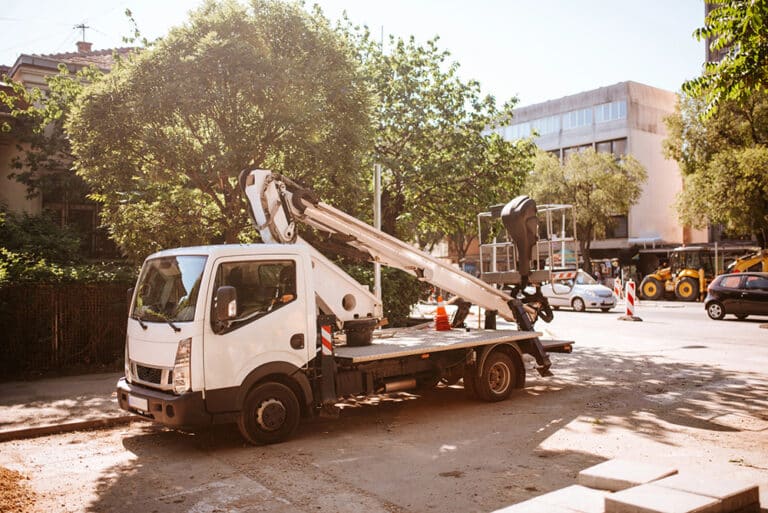
- vehicle-mounted booms
- trailer-mounted booms
The IPAF and CPA guidance adds that the same machines are known locally by many different names. Its list includes vertical personnel platforms (VPP), push around verticals (PAV), van mounted and vehicle mounted machines, scissor lifts, drivable mast platforms, static mast platforms, trailer towables, sigma lifts, telescopic booms, articulated booms, super booms, boom lifts and atrium or spider lifts. Other common names include cherry picker and powered access platform.
Vertical machines
Vertical machines, such as scissor lifts and mast platforms, raise the platform more or less straight up. They suit work directly above the machine, such as ceilings and high shelving.
Boom machines
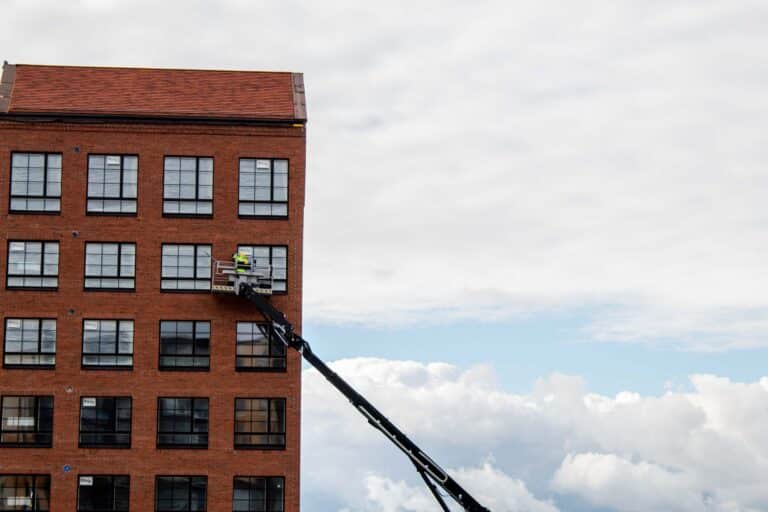
Boom machines carry the platform on an arm, which may be telescopic, articulated or a mix of both. The arm lets the platform reach up and out, over obstacles or away from the base. A cherry picker is a common name for a boom type MEWP, and our guide on what a cherry picker is looks at these in more detail.
Vehicle, trailer and tracked machines
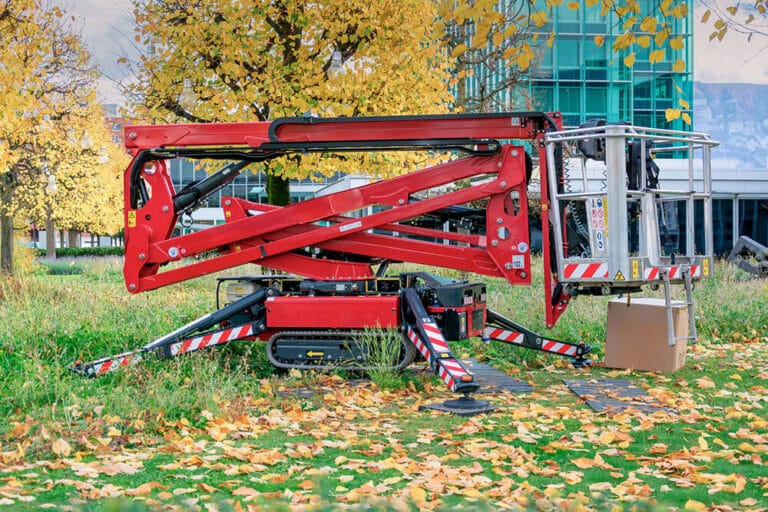
Some booms are mounted on a road vehicle, some are towed on a trailer and others sit on a compact tracked base, often called spider lifts. The base affects how the machine gets to site and where it can be set up.
MEWP categories: groups and types
MEWP categories are built from two simple questions about the machine. The IPAF and CPA guidance explains these using the definitions in EN280, the harmonised European design standard for MEWPs.
The first question is about where the platform can go:
- Group A: the centre of the platform always stays within the machine’s tipping lines, in every platform position, at the maximum chassis slope set by the manufacturer.
- Group B: all other MEWPs, which in practice means machines whose platform can reach out beyond the base.
The second question is about travel:
- Type 1: the machine can only travel in its stowed, transport position.
- Type 2: it can travel with the platform raised, controlled from the chassis.
- Type 3: it can travel with the platform raised, controlled from the platform.
IPAF’s machine categories leaflet explains that a MEWP category combines a number and a letter, so 3A, for example, is a MEWP category. The leaflet groups machines under static verticals, static booms, mobile verticals and mobile booms, with a separate “special” heading for Type 2 machines and specialist MEWPs, which need specific training. As one example, the IPAF and CPA guidance places vehicle-mounted MEWPs in the static boom (1b) category.
Categories matter mainly for training and selection. IPAF says they are assigned so machines can be referred to consistently worldwide and so the right training can be chosen.
What rules apply to MEWPs?
GEIS6 sets out three sets of regulations that apply to MEWP use:
- The Work at Height Regulations 2005, which require work at height to be assessed, planned and organised, with the most suitable work equipment chosen.
- The Provision and Use of Work Equipment Regulations 1998 (PUWER), which require risks from work equipment to be prevented or controlled, including the risk of mobile equipment overturning.
- The Lifting Operations and Lifting Equipment Regulations 1998 (LOLER), which require lifting operations to be planned by a competent person and equipment used for lifting people, including MEWPs, to be thoroughly examined at regular intervals.
HSE’s MEWP page for construction states that a MEWP must be thoroughly examined at least every six months by a competent person, or in line with an examination scheme drawn up by a competent person. HSE also expects daily visual checks, regular inspections and servicing in line with the manufacturer’s instructions.
On training, the same HSE page says operators are expected to complete a recognised training course and hold a certificate, card or licence showing the MEWP categories they are trained to operate. Familiarisation on the specific make and model is also expected. Detailed operating procedures are found in the manufacturer’s instructions, the employer’s risk assessment and operator training.
Our team carries out LOLER inspections on all of these machine types across the UK. If you are not sure which category a particular machine falls into, or which examination regime applies to it, speak to our team.
To arrange a LOLER inspection, servicing or repairs for your MEWPs, contact our team on 0330 223 7390 or email info@lolermewp.co.uk.